
Designing the Strapi schema as the editorial interface
Black Wall Street Journey · shipped 2021–2026
- Role
- Platform Architect / Sole Engineer
- Timeframe
- V1 for the 2021 exhibition, extended in V2.
Designed the content model and editorial workflow as an interface for researchers and curators to work in directly, rather than as a backend an engineer would operate on their behalf
About the project
Black Wall Street Journey is Rick Lowe's public-history initiative on Black wealth-building in Chicago. I was the sole software engineer, from the first system in 2021 through the public site that followed. Two versions: a timed installation across three Chicago venues, and a public website built from the same research.
- Timeframe
- Software involvement: 2021–2026; primary commissioned engineering: 2021–2022
Overview
Making room for collaborators to edit
Researchers, curators, and Rick Lowe's studio supplied Black Wall Street Journey's material. I was the sole software engineer. If every correction had to pass through me before reaching the exhibition, content work would compete with building and maintaining the application.
I designed the Strapi model for collaborators to use directly. That made the generated admin part of the product I was responsible for: field names, relationships, and the placement of content affected how someone entered and revised their work.
Editing through the model
Strapi generated much of the editing interface from the schema. A field's name became a label, its type determined the input, and its relationship to another record influenced where someone had to go to edit it. I had to consider those consequences while choosing the data structure.
A separate collection record could be useful when an item needed its own identity or reuse. An embedded component let someone edit material inside its parent. Neither arrangement was inherently easier in every case. I needed to decide which work belonged together on a screen and which material should be managed separately.
V1 used both. Chapters related to slide records; each slide contained its selected presentation component and duration fields. The schema did not put all of a chapter's slide editing inline. It gave the installation a hierarchy while keeping the details of each slide together.
Solution
Making the editorial work explicit
There was no established content structure I could simply implement. I had to create one that collaborators could use to prepare the installation. I kept the technical model close to recognizable editorial units: a timeline, chapters, and slides with their content and timing.
The public website needed a different editing task. In V2, a chapter contained an ordered mix of content components directly, including text, quotations, statistics, images, and video. General pages had their own block composition. Global navigation and footer content lived in a single type so they could be maintained centrally.
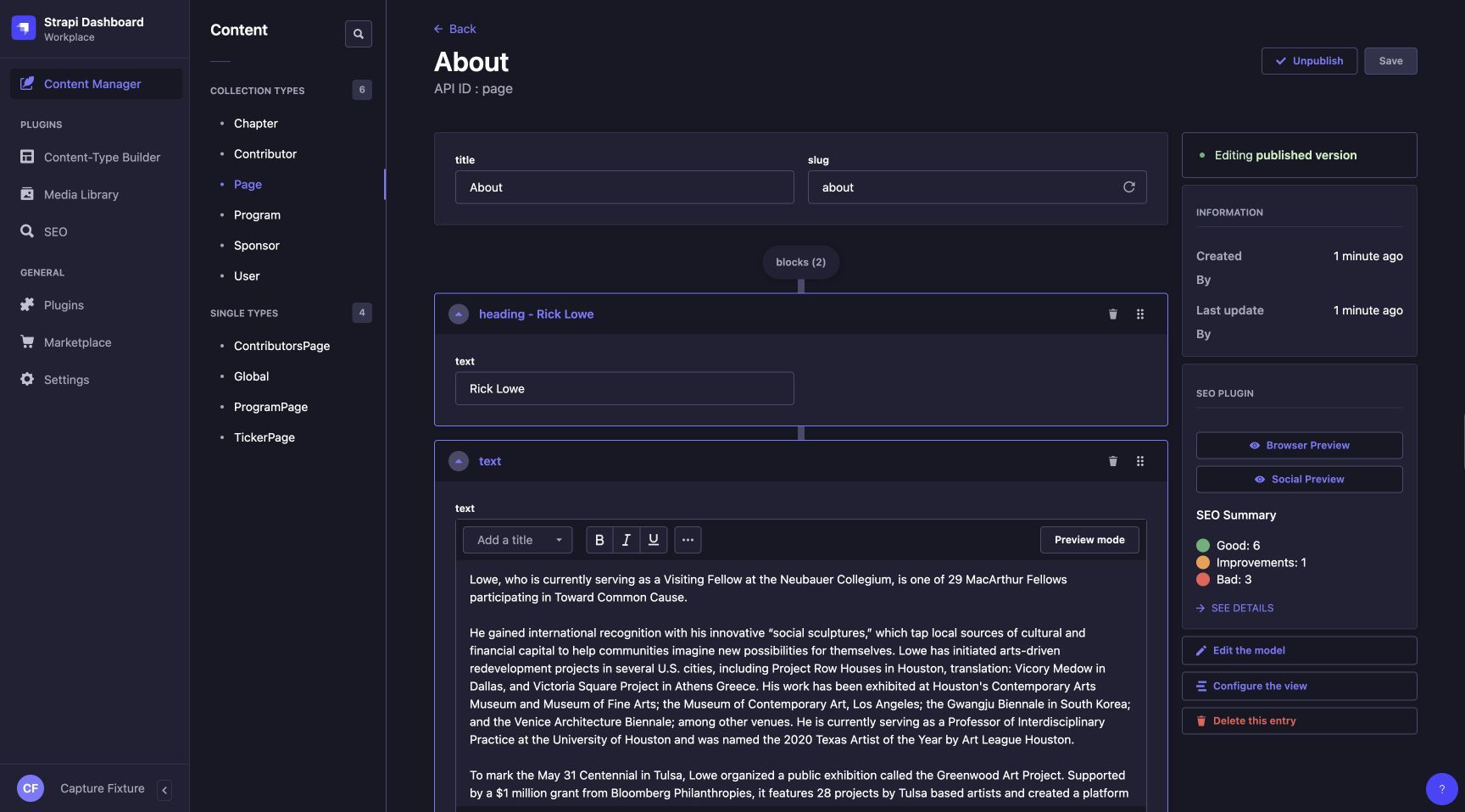
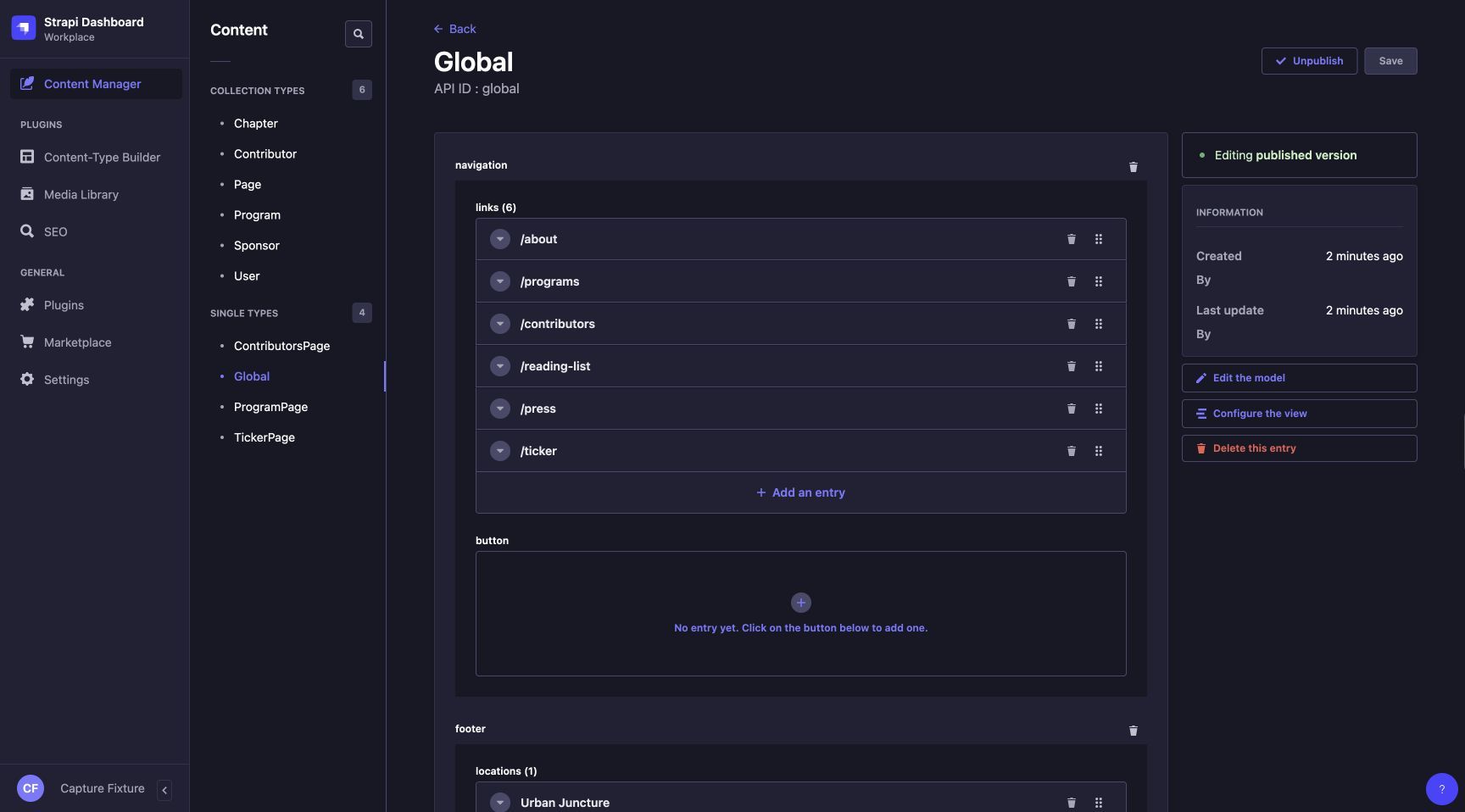
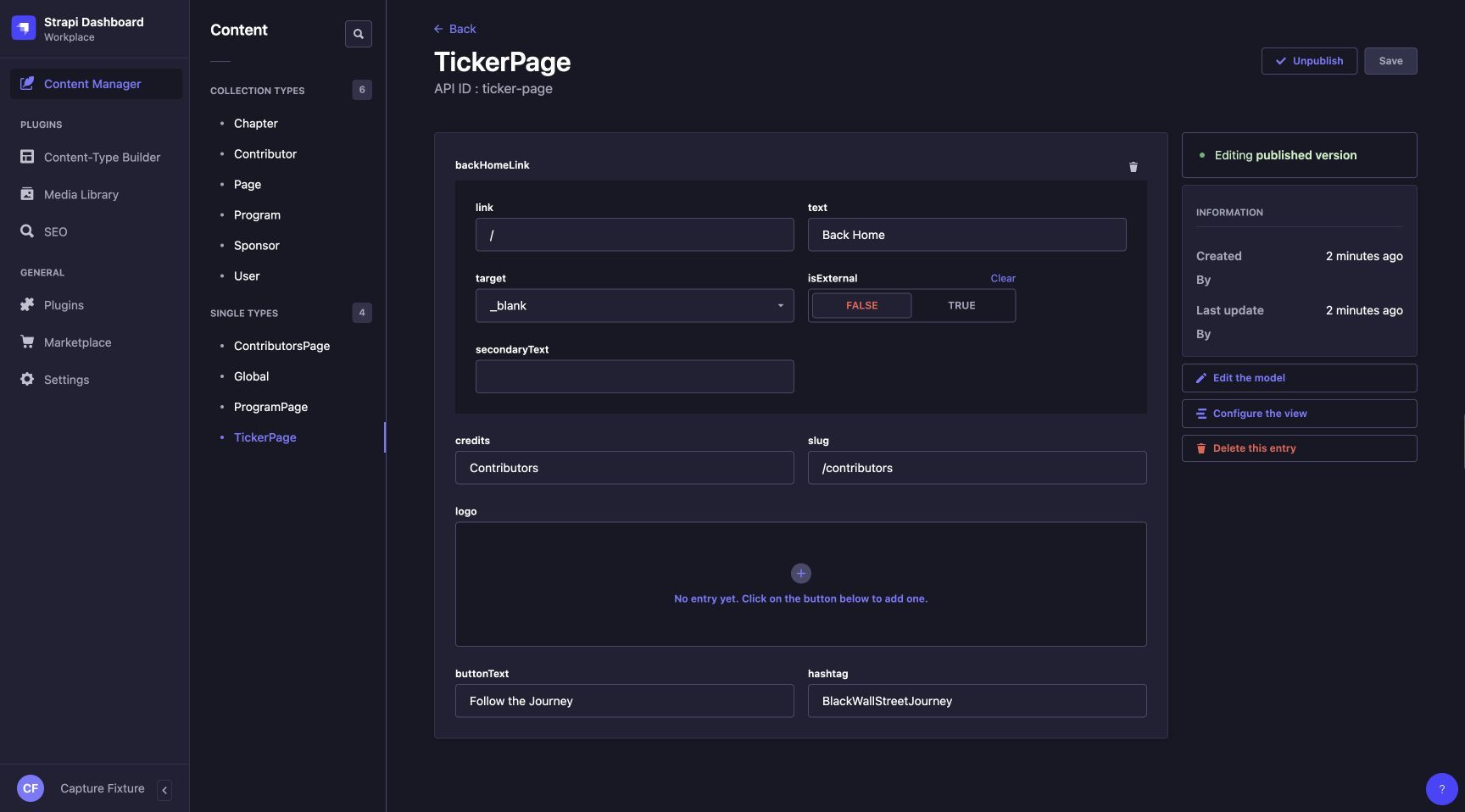
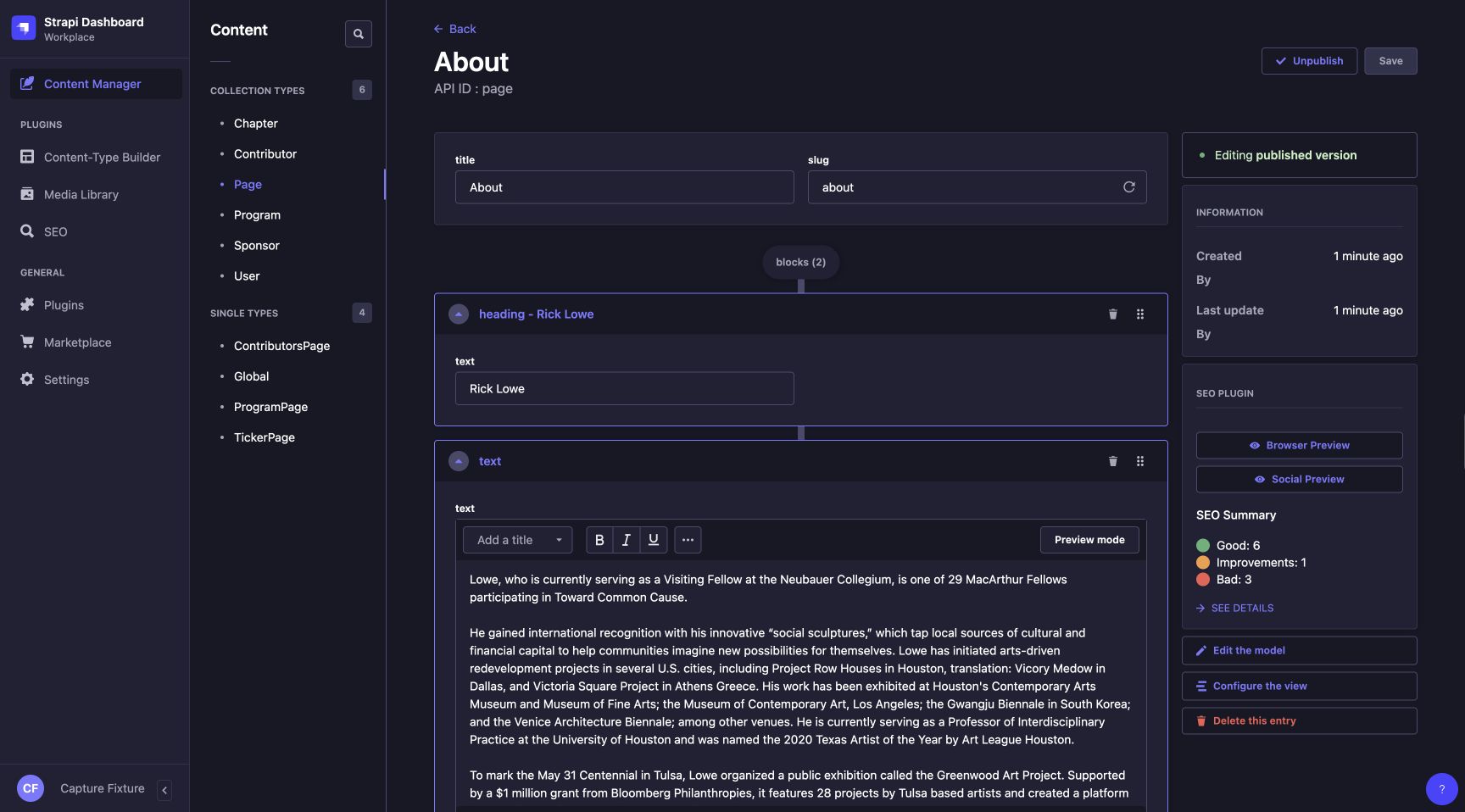
The distinction between V1's related slides and V2's chapter components is visible in the preserved schemas. It also explains why schema review needed to include the admin: two ways of grouping content in an API could produce different editing paths.
- Researchers + curator → Documents: Prepare material
- Documents → Engineer copies into CMS: Hand off
- Engineer copies into CMS → Published application: Publish
Supporting direct editing
Collaborators entered and edited content directly in V1. That gave the people responsible for the material a way to revise it without making every change an implementation task. They could still need help, and I remained responsible for the model and application.
I did not measure turnaround time. The benefit I was designing for was access to the work: collaborators could manage the content and its pacing in the system that supplied the exhibition.
An engineer-mediated process could have offered a familiar document-writing environment and centralized review. I chose direct CMS work because the people responsible for the material needed access to its presentation and pacing. That choice moved responsibility into the editing structure I built.
Reflection
The model was part of the editing experience
The schema became something people worked through. That changed the cost of maintenance: a field rename could require an explanation, and moving content into a related record could alter an editor's routine even if the API remained correct.
I had to account for that alongside the usual technical reasons to reorganize a model. A cleaner relationship in code would not automatically justify asking collaborators to learn another path through the admin.
The lasting constraint was that I owned the interface without owning the material. I could structure how it entered the system and how the application consumed it, while leaving the research and curatorial decisions with the people responsible for them. The preserved models document that structure; my recollection supplies the account of how we worked with it.